

Public Health Beyond the Spotlight — Lessons from Madagascar
Public health systems across Africa continue to face increasing pressure as multiple crises emerge simultaneously, particularly in regions that often receive less global attention. Recent developments in Madagascar highlight how environmental, infectious and systemic challenges can converge, placing significant strain on already fragile health systems.
Madagascar is currently grappling with the aftermath of Cyclones Fytia and Gezani, alongside a resurgence of Malaria and a newly documented Mpox outbreak. These overlapping challenges continue to test the country’s response capacity and health system resilience.
Recent reports also indicate that Madagascar and Comoros are facing their first outbreaks of Clade Ib Mpox, with cross-island transmission further complicating containment efforts. These outbreaks are unfolding in the context of fragile health systems and recent environmental disruption, making response efforts more complex.
Climate-related disasters such as cyclones can severely disrupt healthcare delivery, damaging infrastructure and limiting access to essential services. In Madagascar, this has compounded existing vulnerabilities, making it more difficult to respond effectively to ongoing and emerging health threats.
In response, efforts are being made to strengthen emergency preparedness and coordination. Support provided by Africa CDC includes infrastructure and equipment valued at approximately US$300,000, as well as specialised training for 40 frontline health workers in Emergency Operations Centre management and the Incident Management System. This initiative is expected to enhance coordination, improve response times and support more effective management of health emergencies.
These overlapping crises highlight a broader reality, public health challenges across Africa are not confined to the most visible countries. Many regions continue to face significant gaps in preparedness, response capacity and access to timely care, often with limited visibility on the global stage.
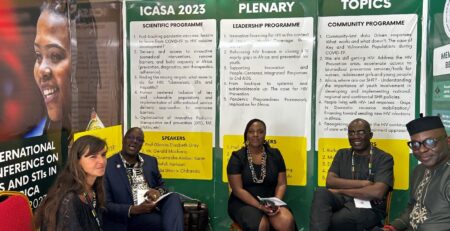
This is where the role of platforms such as ICASA and the work of SAA becomes increasingly important. While historically rooted in the HIV response, these platforms now reflect a broader and more integrated approach, addressing tuberculosis, malaria and wider public health priorities across the continent. Expanding outreach beyond major hubs and strengthening engagement in underrepresented regions is essential to ensuring that no community is left behind.
Sustained collaboration, knowledge sharing and strategic investment remain key to supporting this expansion and strengthening health systems where they are needed most.
Understanding these evolving challenges is critical to building more resilient, inclusive and responsive public health systems across Africa.
Source: The Lancet



Leave a Reply