

Foundations and Legacies: 35 Years of ICASA and SAA
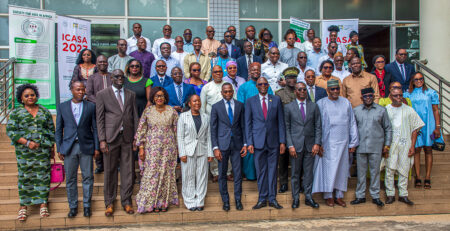
For 35 years, ICASA has been more than a conference; it has been a continental force shaping Africa’s HIV response. From the early days of advocacy and scientific breakthroughs to expanding community leadership and South-South collaboration, the movement has built a legacy that continues to guide Africa’s health agenda. This commemorative session reflected on that history while confronting the urgent question ahead: How can Africa leverage this legacy to build resilient, equitable, and people-centered health systems for the next generation?
Reclaiming Health as a Public Good
Speakers from Zimbabwe, Rwanda, Côte d’Ivoire, and across the continent underscored a powerful message: health must remain a fundamental human right, not a commodity shaped by market forces. While South Africa spends 8.8% of its GDP on health, the majority of resources still serve a minority of the population, a reminder that financial commitment alone is not enough without equity.
Transforming this reality requires repositioning primary health care (PHC) at the heart of national strategies, ensuring budgets reflect actual community needs, and elevating health to the top tier of political priorities. The session called for a renewed governance model where leaders treat health as a public investment essential for socioeconomic stability, not an expenditure to be minimized.
Community Power and the Strengthening of PHC
A central theme echoed throughout the discussion was the irreplaceable role of communities in driving Africa’s HIV gains. Community health workers, civil society, activists, and peer networks have pushed health services further than infrastructure alone ever could. As Africa broadens its health agenda to include TB, malaria, NCDs, mental health, and sexual and reproductive health, these community structures must remain at the center.
Participants emphasized the need to expand and professionalize community health worker programs, strengthen community-led monitoring, and integrate services around the person rather than the disease. Innovation from digital tools to emerging AI technologies was highlighted as an opportunity to improve surveillance, adherence, education, and individualized care when powered by community ownership.
Building Integrated and Efficient Systems
Africa’s health systems remain fragmented, often organized in vertical programs that limit efficiency and long-term sustainability. The session stressed that integration is no longer optional. To meet current and future health challenges, countries must unify service delivery across communicable and non-communicable diseases, break institutional silos, and invest in robust data systems that support holistic care.
Speakers also underscored the importance of regional cooperation, particularly for surveillance and emergency preparedness, noting that diseases do not respect borders. By harmonizing strategies and strengthening continental bodies, Africa can better prepare for future health threats while protecting the progress made in HIV.
Multi-Sectoral Leadership for Sustainable Impact
The HIV movement succeeded because it transcended the health sector: activists mobilized communities, educators engaged youth, finance ministries funded responses, and political leaders championed change. Today’s challenges—commercialization of care, growing inequities, and inefficiencies in financing—require that same whole-of-society effort.
Opportunities identified include deeper engagement of ministries beyond health, accountability frameworks that involve communities and parliamentarians, and ethical public-private partnerships that support innovation without undermining equity. The session made clear that multisectoral leadership is indispensable for delivering people-centered health systems.
Financing, Accountability, and the Need for a New “Abuja Moment”
The call for renewed political commitment was strong. To secure sustainable financing, countries must set clear domestic investment targets focused on PHC and community systems, backed by transparent accountability tools for monitoring resource allocation. Participants also highlighted the potential of innovative financing mechanisms, including regional health funds and community-based health insurance models, to reduce dependency on external donors.
Many speakers advocated for a modern “Abuja Declaration for Health Equity,” designed to reflect Africa’s contemporary health realities and mobilize high-level leadership to secure long-term investment.
Reimagining the Future of ICASA
As ICASA celebrates 35 years, the session challenged the movement to evolve. Speakers envisioned ICASA as a continental engine for health impact, a platform that not only hosts dialogue but also actively drives advocacy, resource mobilization, capacity building, and accountability. They called for strengthening community representation, expanding the conference’s scope beyond HIV, and establishing a dedicated continental group to shape ICASA’s strategic direction for the future.
Conclusion
The past 35 years of ICASA tell a powerful story: Africa can overcome even the greatest health challenges through solidarity, innovation, and community leadership. But as the continent confronts rising health burdens from NCDs to system fragmentation and financing gaps, the next chapter requires deeper integration, stronger community systems, bold political commitment, and sustained multisectoral action.
By reaffirming health as a public good and investing in sustainable, people-centered approaches, Africa can honor the legacy of ICASA and build a future where everyone, regardless of place, gender, or economic status, is protected, empowered, and never left behind.





Leave a Reply