Breaking the Silence: Youth at the Frontline of Ending HIV in Africa
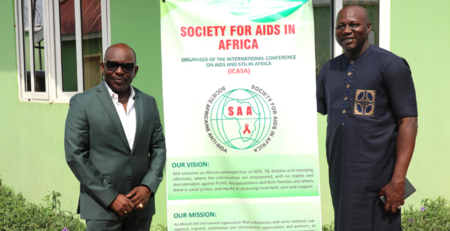
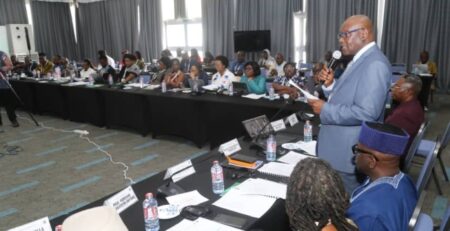
In a world where science has made remarkable progress in the fight against HIV, one stubborn reality persists — the silence, stigma, and shame that continue to fuel the epidemic. Speaking at the University of Ghana Medical Laboratory Science Association’s 13th Annual Scientific Conference, the ICASA Director, Mr Luc Bodea, delivered a powerful call to action. The message was clear: the fight against HIV is far from over, and young people hold the key to ending it.
Despite advances in treatment and prevention, sub-Saharan Africa remains the epicenter of the HIV epidemic. According to UNAIDS’ 2024 Global AIDS Update, every week 3,100 adolescent girls and young women in the region become infected — a rate that translates to one new infection every three to four minutes. Young people, especially adolescent girls, as well as youth from key populations including men who have sex with men, sex workers, people who inject drugs, transgender individuals, and incarcerated youth, face disproportionate risk. Yet, they are also among the most powerful agents of change.
Universities, the ICASA Director reminded the audience, are more than academic institutions. They are incubators of social change. Throughout history, young people have driven major movements, and the fight against HIV is no exception. But the silence surrounding HIV continues to have deadly consequences. It stifles open conversations about sex, condoms, and prevention. It prevents people from seeking testing or learning their status. It obscures life-saving prevention tools like PrEP, PEP, and the U=U message from those who need them most. It sustains myths, stigma, and discrimination that isolate people living with HIV.
Among the most important tools for prevention and treatment are PrEP, a daily pill or injection that reduces sexual transmission of HIV by 99% when taken consistently; PEP, an emergency medication taken within 72 hours of possible exposure and continued for 28 days; and the U=U principle — Undetectable equals Untransmittable — which means that a person living with HIV who achieves and maintains an undetectable viral load cannot transmit the virus sexually. These tools save lives, but they can only do so if people are informed about them and able to access them.
Africa has already made ambitious commitments to end AIDS by 2030 through agreements such as the Abuja Declaration, the AU Roadmap on Shared Responsibility, and the Special Summit Declaration on HIV/AIDS, TB, and Malaria. Yet, without concrete action, these promises remain just words on paper. This is where young people play a crucial role — holding leaders accountable, demanding progress, and ensuring no one is left behind.
Quoting Nelson Mandela, the ICASA Director reminded the audience that “AIDS is no longer just a disease; it is a human rights issue… AIDS is a war against humanity.” Ending that war will require more than medicine. It will demand courage, compassion, and collective action. In closing, the Director issued a rallying cry: “Let us break the silence. Let us lift our voices. Let us lead boldly, fearlessly, and together toward an HIV-free generation.”
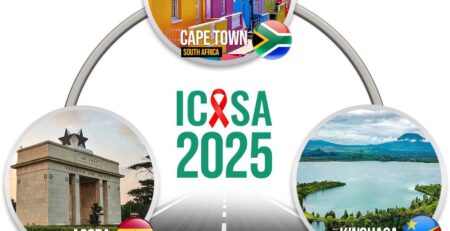
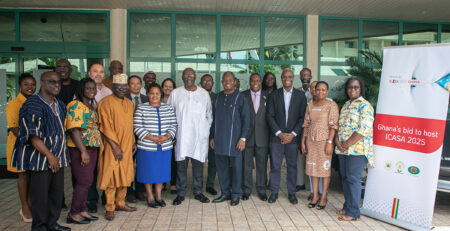
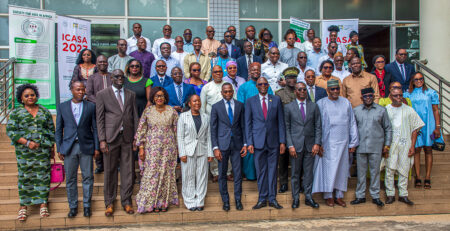
The momentum will continue at the International Conference on AIDS and STIs in Africa (ICASA), which will take place from December 3–8, 2025, in Accra, Ghana. The invitation is open. The time to act is now.