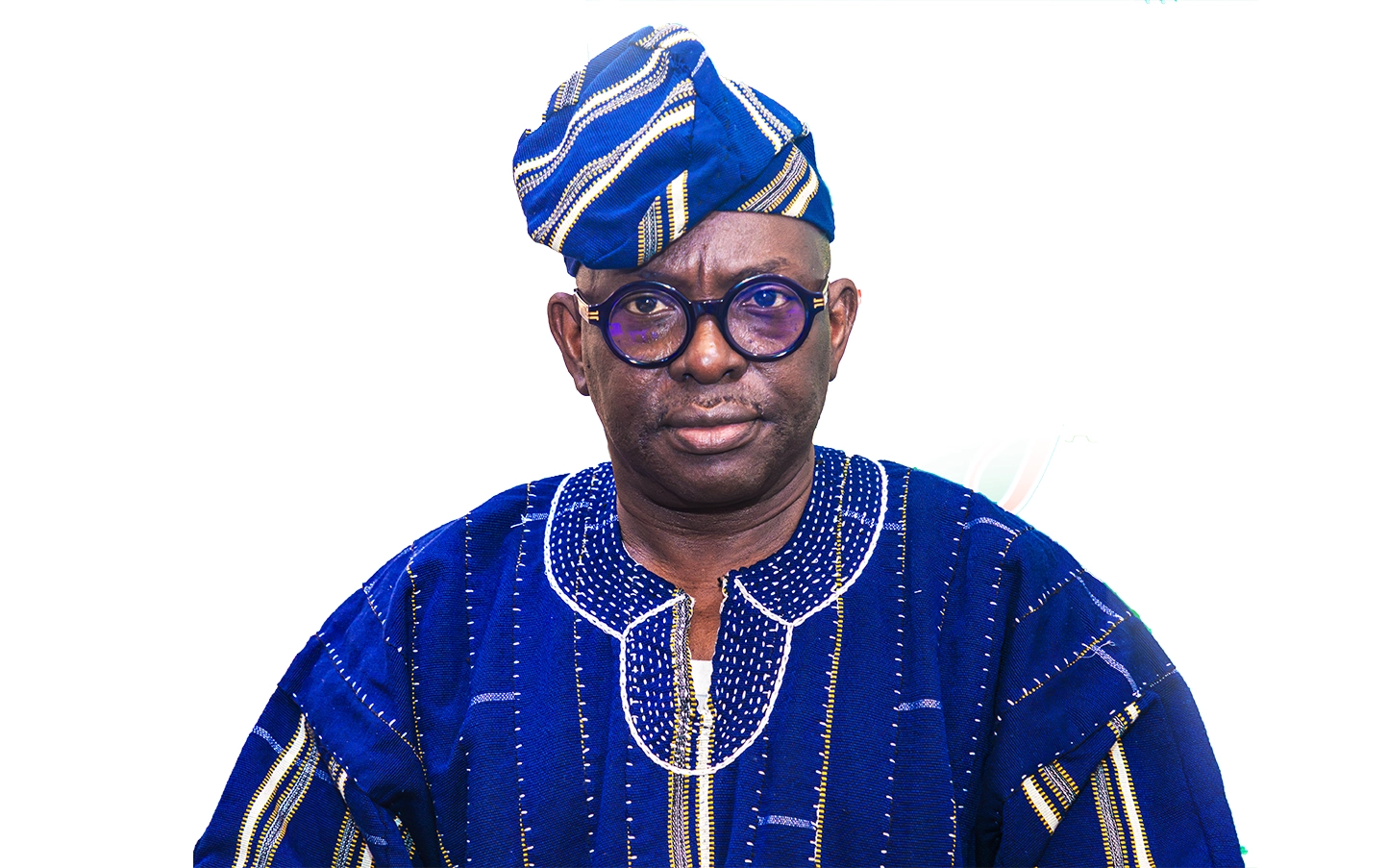
Opening Remarks by the Director of ICASA International Youth Day 2026 Webinar
Opening Remarks by the Director of ICASA
International Youth Day 2026
“Different Contexts, Common Aspirations: Rethinking Prevention for Africa’s Youth”
Good afternoon, distinguished guests, partners, speakers, colleagues, and, most importantly, young people joining us from Africa and from around the world.
On behalf of the Society for AIDS in Africa, it is my great pleasure and privilege to welcome you to this International Youth Day dialogue under the theme:
“Different Contexts, Common Aspirations: Rethinking Prevention for Africa’s Youth.”
Today, we are not simply here to talk about young people.
We are here to listen to them, to learn from them, and to reflect honestly on what we, as leaders, are doing to create the future they deserve.
Africa is the youngest continent in the world. Nearly 60 per cent of Africa’s population is under the age of 25. And as we look towards 2050, more than one in three young people aged 15 to 24 worldwide is expected to be African.
This is not simply a demographic statistic.
It is Africa’s greatest opportunity and perhaps our greatest responsibility.
The future of Africa will be determined by what we do today for, and with, our young people.
Allow me, for a moment, to speak about Mother Africa.
Africa is vast. Its landmass is larger than China, the United States and Europe individually. It possesses extraordinary agricultural potential, enormous natural resources, critical minerals, energy resources, biodiversity and, above all, an extraordinary human resource: its people.
Africa holds roughly 60 per cent of the world’s uncultivated arable land.
Our continent is richly endowed with gold, diamonds, cobalt, copper, oil, gas and many of the critical minerals that the modern world needs for technology, energy and industry.
But let us be honest with ourselves.
Africa’s greatest resource is not gold. It is not oil. It is not diamonds. It is not cobalt.
Africa’s greatest resource is its people and Africa’s greatest people are its young people.
And yet, despite this extraordinary wealth and potential, millions of young Africans still struggle to access quality education, practical skills, decent employment, security, social protection and essential healthcare.
This is the contradiction we must confront.
How can a continent so rich in land, resources and human potential have young people who feel that their best chance for a future lies somewhere else?
How can we accept that a young African may look across the sea and see more hope than he or she sees at home?
How can we accept that some young people are prepared to cross deserts, face traffickers, risk imprisonment, cross dangerous seas and even risk death in search of dignity, opportunity and a better life?
These are not merely migration questions.
They are questions about development.
They are questions about leadership.
They are questions about dignity.
And ultimately, they are questions about prevention.
The Central Mediterranean remains one of the world’s deadliest migration routes. IOM has documented thousands of migrant deaths and disappearances along this route, including more than 15,000 deaths since 2014 in data available from its thematic reporting.
Behind every number is a human being.
A son.
A daughter.
A brother.
A sister.
A friend.
And behind every person who disappears is a family left asking a question that may never be answered:
“What could we have done differently?”
So today, I want to ask another question not only of young people, but of all of us in positions of responsibility:
What are our governments, our institutions, our development partners and our leaders doing to ensure that young Africans do not have to risk their lives simply to find a future?
When young people are willing to risk death in search of opportunity, we must rethink what prevention means.
We must rethink not only HIV prevention.
We must rethink prevention of despair.
Prevention of exclusion.
Prevention of violence.
Prevention of substance dependence.
Prevention of misinformation.
Prevention of avoidable illness.
And prevention of the social and economic conditions that leave young people believing that they have no future at home.
This is why today’s theme is so important.
Different contexts. Common aspirations.
Young people across Africa may live in very different circumstances. A young woman in Nairobi, a student in Accra, a young entrepreneur in Lagos, a young person in a rural community, a refugee, a migrant, or a young person in Europe may face very different realities.
But their aspirations are remarkably similar.
They want good health.
They want education.
They want decent work.
They want safety.
They want dignity.
They want to be heard.
And they want the opportunity to build a meaningful future.
The United Nations has emphasized that young people everywhere share aspirations for education, decent work, good health, a voice in decisions that affect their lives and the opportunity to build a better future.
Adolescent girls and young women continue to experience a disproportionate burden of HIV in sub-Saharan Africa. UNAIDS reported that in 2024 more than 210,000 adolescent girls and young women aged 15–24 acquired HIV an average of about 570 new infections every day.
HIV prevention cannot be separated from the realities of young people’s lives.
We cannot simply tell young people to “make better choices” while ignoring the circumstances in which those choices are made.
We must address gender inequality.
We must address sexual and gender-based violence.
We must address poverty and economic vulnerability.
We must address stigma and discrimination.
We must address substance use and dependence.
We must address misinformation.
And we must ensure that young people can access prevention services without fear, shame or judgment.
PrEP and PEP are important tools. WHO recognizes PrEP as an effective HIV prevention option for people at substantial risk, and PEP must be made available rapidly following potential exposure.
But prevention is not only a pill.
Prevention is information.
Prevention is education.
Prevention is empowerment.
Prevention is protection.
Prevention is opportunity.
Prevention is dignity.
Distinguished guests,
Africa does not lack resources.
Africa does not lack talent.
Africa does not lack ideas.
What we need is greater urgency, stronger institutions, better investments and leadership that is willing to turn Africa’s extraordinary potential into opportunities for its people.
We need governments that invest in education and skills.
We need economies that create decent jobs.
We need health systems that are accessible, affordable and youth-friendly.
We need communities that protect young people from violence and exploitation.
We need leaders who take mental health and substance dependence seriously.
We need policies that allow young people to participate meaningfully in decisions that affect their lives.
And we need development partnerships that invest not only in Africa’s problems, but in Africa’s potential.
The United Nations has similarly emphasized the need for greater investment in education, sexual and reproductive health, decent work and meaningful youth participation in decision-making.
I look forward to seeing this conversation continue, deepen and translate into action as we move towards ICASA 2027 in Benin Republic.
To the young people joining us today, I say:
Your future is Africa’s future.
Your voice is Africa’s voice.
And your aspirations must be at the heart of our work.
Thank you very much.